Robot shredding rare books to train AI models
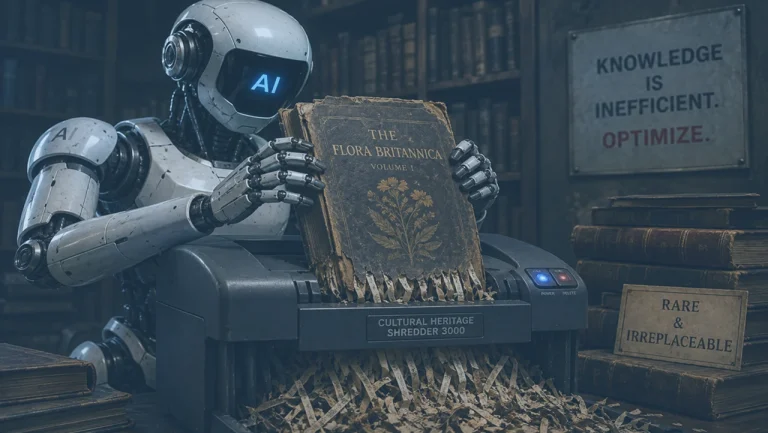
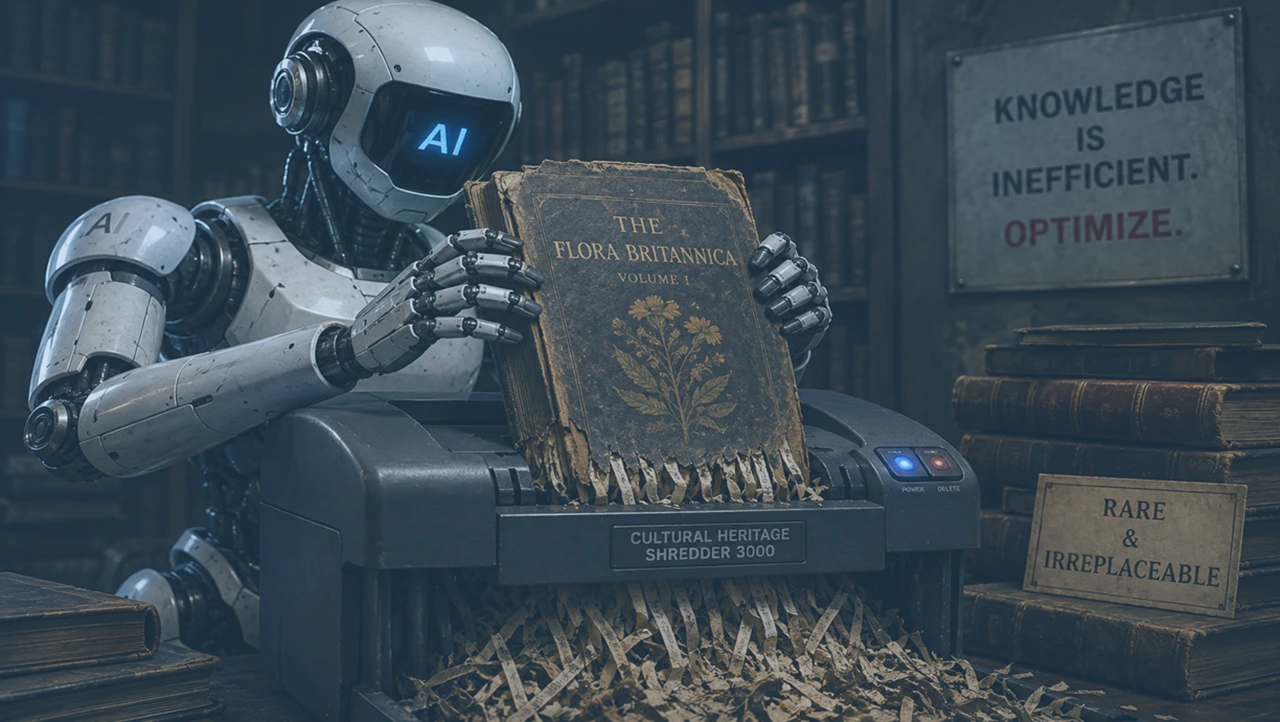
Bookseller and e-commerce giant Amazon is reportedly buying rare books and destroying them to train its AI model. 404 Media discovered the practice after placing an AirTag in a rare book and tracking it to an Amazon facility in Las Vegas.
“Amazon is buying massive quantities of books, scanning them for AI training data, and destroying them in the process,” the media giant wrote.
Amazon did not deny the practice but justified it by claiming that it “purchases books through commercial channels to improve the products and services customers use.”
Ruling opens the floodgates for AI companies to scan books for digital storage and AI training.
The practice follows a lawsuit by book authors targeting AI giant Anthropic in which the judge ruled that the practice falls under fair use.
Former OpenAI employees formed Anthropic and are behind the popular AI service Claude. Axis Intelligence estimates that Claude has between 30 million and 33 million monthly active users, while Sensor Tower and Statista estimate that the AI model reaches approximately 245 million users worldwide. Its annual revenue exceeded $65 billion in 2026.
The lawsuit alleges that the AI firm downloaded millions of books from pirate sites and also bought copyrighted books from legitimate channels, tore off their bindings, scanned them, and stored them in a digitized, searchable format to create a central library.
“From this central library, the AI firm selected various sets and subsets of digitized books to train various large language models under development to power its AI services. Some of these books were written by plaintiff authors, who now sue for copyright infringement.”
The plaintiffs alleged that when a user prompts Claude, it responds with text that matches human reading and writing habits because the AI company trained its model on a central library of books not written by AI.
In his June 2025 ruling, Judge William Alsup stated that training Anthropic’s AI model with scanned copyrighted books amounted to fair use. The judge also ruled that Anthropic’s use of legitimately purchased books also amounted to fair use because it replaced physical books with easily searchable copies.
However, Judge Alsup ruled that using books downloaded from pirate websites did not amount to fair use. In July 2026, Anthropic settled with the authors for $1.5 billion for more than 482,000 books scanned to train the AI models, averaging about $3,000 per claimed book.
Nevertheless, the ruling opened the floodgates for other AI companies, including Amazon and Anthropic, to continue buying, slicing, and scanning books obtained from legitimate channels to train their AI models and store them in searchable digital formats.
Books scanned to train AI models.
While 404 Media did not disclose the title of the scanned rare books, the plaintiffs in the Anthropic lawsuit include Andrea Bartz, whose books The Lost Night: A Novel, The Herd, We Were Never Here, and The Spare Room were allegedly scanned by Anthropic.
Others include The Good Nurse: A True Story of Medicine, Madness, and Murder, and The Breakthrough: Immunotherapy and the Race to Cure Cancer, by Charles Graeber.
Kirk Wallace Johnson’s To Be A Friend Is Fatal: The Fight to Save the Iraqis America Left Behind, The Feather Thief: Beauty, Obsession, and the Natural History Heist of the Century, and The Fishermen and the Dragon: Fear, Greed, and a Fight for Justice on the Gulf Coast were also allegedly used to train Anthropic’s AI model Claude.
About the Author